


Blisters is probably the most common problem of hikers, hunters, and backpackers alongside mosquito bites and rain. Of the three, blisters may be the most problematic because if left alone, it can lead to an infection and very painful wounds.
Unlike mosquito bites which can be treated with a special anti-itch spray, you cannot spray away the pain from a blister. In this article you’ll learn the best ways to prevent blisters when hiking.
Prevent Blisters When Hiking: Why do they appear
Poor Choice of Footwear
Fortunately, blisters from the wrong shoes, long hikes, or poor walking form are man-made which means they can be prevented. For instance, days before your hike, break in your shoes. Blisters can develop from ill-fitting shoes because of friction between the skin and the shoe. When the foot moves inside the shoe, it rubs against the inside surface, causing friction and heat. This can cause the skin to become irritated and eventually form a blister. Poorly fitting shoes can also cause pressure points that can lead to blisters. It only takes 15 minutes for a blister to form.
According to feet specialists, blisters from ill-fitting shoes are caused by 4 things:
- Too small shoes
- Too big shoes
- Lack of protective cushion
- Too tough or wrong materials used
To prevent blisters when hiking, here what you should do as a rule:
1. Wear hiking socks if you plan to buy hiking shoes. If you don’t have hiking socks, get couple of pairs before buying your hiking shoes. The reason you need hiking socks is because they are crafted specifically for long walks.
They dry fast and can be worn for weeks and handle rough conditions and still keep your feet properly insulated, comfortable, and dry. The best socks to get are those made of merino wool or Coolmax because they dry fast and can handle moisture best. Cotton and cotton nylon socks are more likely to cause blisters because they take longer to dry.
2. When trying on shoes, insert your thumb between the end of the shoe and your longest toe. If your finger encounters no resistance or tightness, then the shoe is too big. It’s an age old trick that is pretty dependable. You can also try the finger trick after kicking the ground gently with the stub of the shoe
3. Shop at the end of a long walk to allow your feet to swell up a bit in a bid to mimic hiking feet conditions.
4. Buy only from a store with a good return policy.
How to Prevent Blisters When Hiking
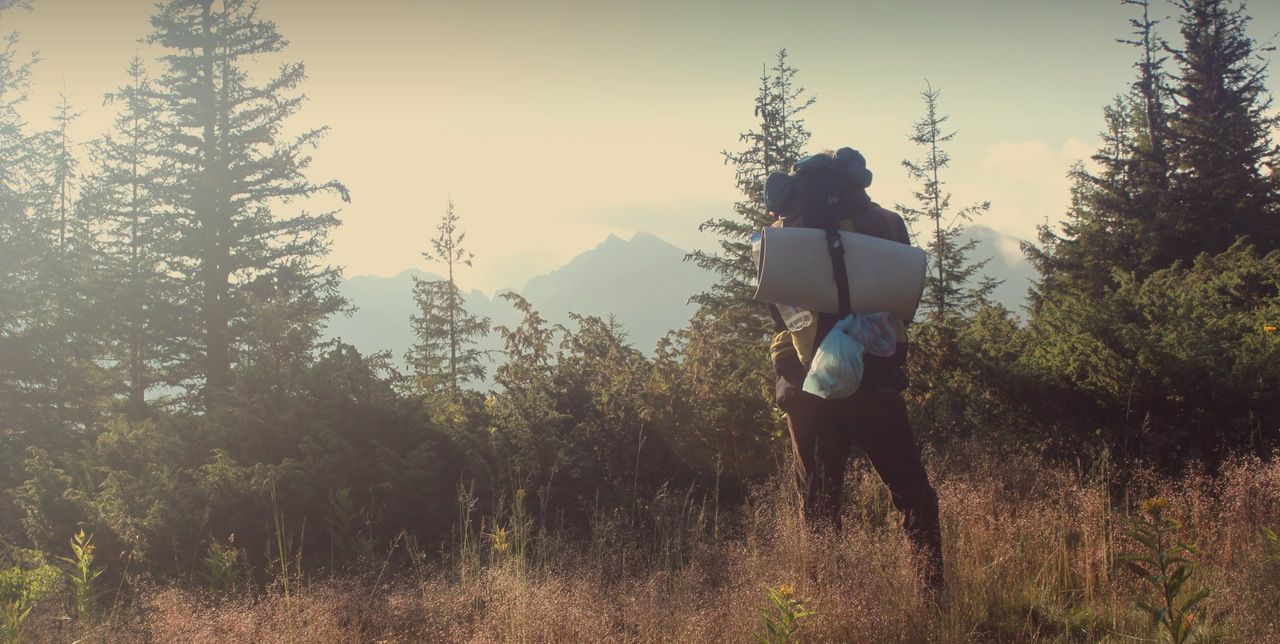
Assuming you have the perfect hiking shoe, great pair of hiking socks and have begun your hike. Then, you start to feel a pain on your foot and notice some redness. There could be several reasons for this.
- Maybe your socks got wet and has begun rubbing against your feet causing the skin to feel tender. To avoid this scenario, always bring an extra pair of socks so you can change your socks once they get damp.
It will also prevent smelly feet. You can also try wearing two pairs of socks at the same time. One pair should be silkier which will cause the two pairs of socks to rub against each other instead of against your skin. Some hikers say it works wonders for them.
- Maybe you have been hiking for a long time without taking a break and your feet are tired so you walk at an angle putting more weight on one side of the feet
- Maybe your feet has a tendency to sweat. Try airing out your feet and taking short breaks to rest. You can also bring some alcohol to wipe your feet dry and apply foot powder. Also, avoid using the same sock for waking and sleeping
- Maybe you need to change your style of lacing. The lacing technique you use should compliment your foot structure and shoe fit
- Maybe you tied your laces too tight
What to Do When You Have a Blister
The first step to take when you notice the blister is to isolate it. Remove socks and shoes and give the skin some breathing space. Some experts advice using a donut bandage but this is not always a good idea because it does not have staying power and will soon start causing friction and pain.
The tendency with tape is for moisture to form soon after you start hiking again and this can aggravate the sensitive skin.
Step two would be to use a blister kit – something you must have among your first aid items. A blister kit should have the following essentials:
- Alcohol wipes
- Antibiotic ointment
- Waterproof medical tape
- Medical scissors
- Tincture of benzoin
- Moleskin of different sizes and thickness
You should also have one of the following products:
- HikeGoo Blister Prevention Cream – This is a foot cream that can help prevent blisters. Apply it once and it will stay effective for 24 hours. It works on all weather conditions, is easy to apply and does not stain or leave a mark.
- RunGoo Blister Prevention Cream – Works in the same way as HikeGoo but is less thick than HikeGoo.
- Natural Anti-Chafe Balm – This cream can be used before a hike to prevent blisters or when the chafing starts to prevent the skin from developing a blister
- Chafe Zone Anti-Chafe & Blister Prevention Lubricant – FDA-compliant but must use before starting out on a hike. This product comes highly recommended by professional athletes.
If your blister has already grown to the size of a small coin and you notice fluid inside, treatment needed is different. First, remove whatever clothing item is touching it, clean it and apply tincture of benzoin to hold the moleskin in place. Try to keep it from popping because an open blister is at risk for infection and foot odor.
On the other hand, if the large blister pops, do not remove the loose skin. Clean the area and apply the moleskin. There can be cases when you have to pop the blister to ease the pressure. Use a sanitized safety pin or needle to prick a small hole, drain the fluid, clean, apply antibiotic, and dress.
What about Taping?
Much has been said about using tape – duct tape, surgical tape, or sports tape. Tape does not hold well if there is moisture which is why tincture of benzoin is recommended. However, to prevent blisters you can try taping blister prone areas like between toes and upper sides of the feet close to the ankles but be sure to use tape that is anti-friction and has lubricant.
The use of tape is a personal choice. Some people believe it helps; others feel it does not. However, it is proven to protect skin surface, offer thermal insulation, reduce friction, and spreads shear load.
Thus if you want to try the tape method, be sure to follow these tips:
- Never rush the process. Do it right the first time and you won’t be frustrated
- Practice using the tape. Keep corner rounded
- Use the right tape and taping techniques. For instance, rub the tape firmly to get it to stick well. If you plan on using the tape that can stretch, avoid stretching it too much because it will put pressure on the adhesive and cause it to be ineffective
- Never forget to use tincture of benzoin properly (on a clean, dry surface)
By following these tips, you will prevent blisters when hiking which will allow you to have a great hike!