

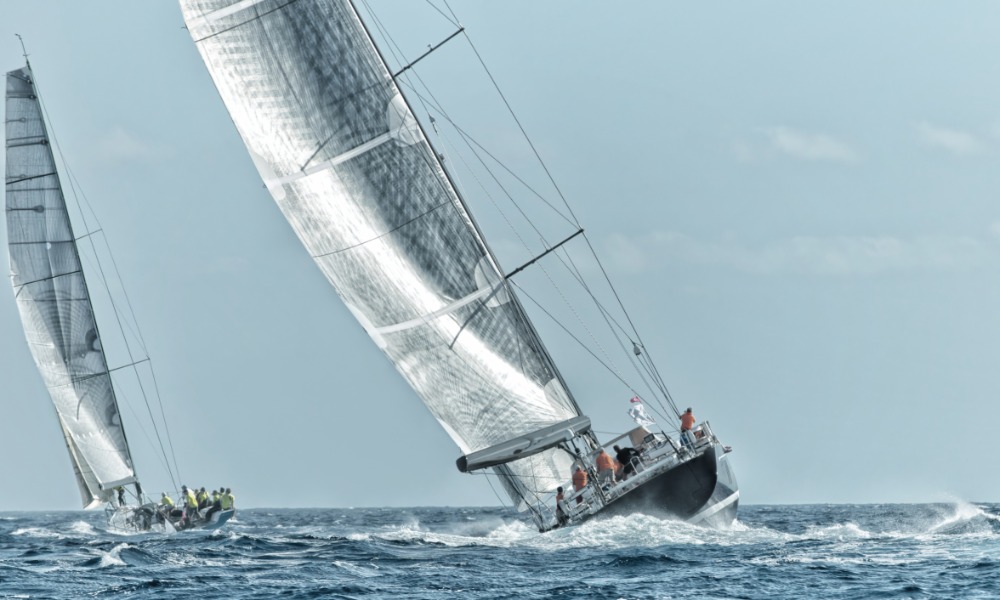
You want to go boating, you’ve checked the forecast, and you see the wind is set to pick up. Now you’re second-guessing the trip. Will it be too uncomfortable or unsafe? In this quick guide, we’ll review how windy is too windy for boating so you can enjoy every outing with complete peace of mind.
Wind Speed Basics
The Beaufort Scale is a 0–12 scale that measures wind intensity from calm to hurricane-force using visible effects on land or water, and it’s the first thing you should check and understand. Here are the basics:
- 0–10 knots: Calm to light breeze. Ideal conditions for most recreational boats.
- 11–16 knots: A gentle to moderate breeze. Small boats start to feel chop, but experienced boaters handle it fine.
- 17–21 knots: Fresh breeze territory. Waves build to 2–4 feet, and boat handling can get tricky.
- 22–27 knots: Strong breeze. Most recreational boaters should stay docked.
- 28+ knots: Near gale and above. You shouldn’t go out unless you’re an experienced offshore captain in a vessel built for it.
How Boat Size Factors In
A 40-foot cruiser handles 20-knot winds differently than a 17-foot center console. Smaller boats have less hull stability, which allows water chop to toss them around. As a general rule, if you’re on a boat under 20 feet in length, treat anything above 15 knots with serious caution, especially on open water.
Wave Height vs. Wind Speed
Wind speed and wave height don’t always match up neatly. A steady 1heightwind on a large lake with a long fetch (the distance wind travels over open water) can produce the same wave height as 20+ knots on a smaller body of water. Check wave height forecasts, not just wind speed, before you leave the dock.
Consider Gusts, Not Just Sustained Wind
Sustained wind is what the forecast shows, but gusts can catch you off guard. A forecast of 14 knots sustained with gusts to 24 means you’ll hit those spikes regularly. So make sure you and your boat can handle the gust number, not just the average.
Rough conditions also put extra stress on your hull and mechanical components. If you’re trying to mitigate vibration on your boat, understanding wind thresholds is part of keeping your ride smooth and your equipment in good shape.
Know Before You Go
It’s never technically “too windy” for boating if you have enough experience and the right vessel, but for most recreational boaters, the comfortable limit is about 15 knots. If you want to navigate waters like a pro, mind your personal restrictions and comfort level, and take every forecast seriously. And if the wind picks up past your comfort zone, the dock is always there to welcome you safely back to land.