

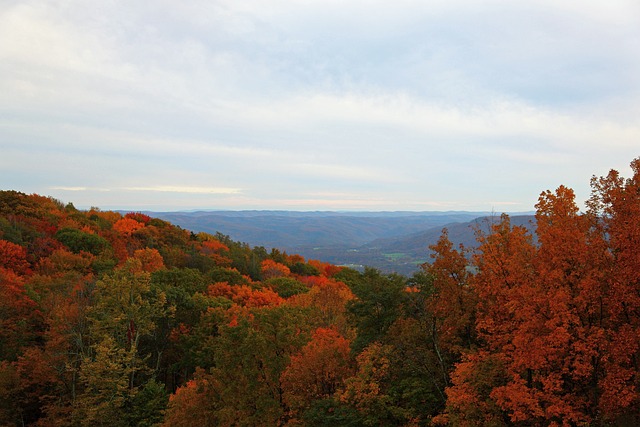
Greetings, fellow wanderers! This is your rambling companion, Kara Parker, from the bustling hub of Outdoors Magazine. My heartstrings are firmly tethered to the path less traveled, exploring America’s diverse trails, each one resonating with its unique melody. Today, I invite you into my world, my footprints tracing the contours of the captivating Cabin Creek Trail nestled within Grayson Highlands State Park. A gem, this trail was, a dance with nature I am itching to reprise.
Grayson Highlands: A Tapestry of Wonder
Virginia, home to the bewitching Grayson Highlands State Park, unfurls a sprawling canvas splashed with scenic grandeur and threaded with trails that beckon the intrepid. The Cabin Creek Trail, an enchanting reel spun into this rich tapestry, wooed me into its embrace. With the giddy spirit of a courting lover, let me serenade you with tales of this captivating path.
Grayson Highlands State Park is nestled in the heart of the Appalachian Mountains in Southwestern Virginia, USA. Its mesmerizing landscapes offer a beautiful retreat, quite a contrast to the city life, yet is reasonably accessible from major cities.
The park is situated near Mouth of Wilson, Virginia, and it is approximately a two-hour drive north of Boone, North Carolina, a well-known hub for outdoor enthusiasts. If you’re looking to fly in from afar, the nearest major city with an airport is Charlotte, North Carolina, roughly a three-and-a-half-hour drive away.
Its proximity to these urban centers makes it an attractive destination for those seeking a respite from city life, to soak in the beauty of the wild and rugged highlands of Virginia.
Echoes of the Cabin Creek Trail
Embarking on the Cabin Creek Trail is akin to stepping into a fluid painting. It unfurls gradually, taking one from the calm of the woodland, its canopy a symphony of leaves whispering sweet nothings, onto the rocky terrain, strewn with the ancient park’s geological tales. As the crescendo, the path introduces a bubbling creek, leading starry-eyed explorers to the magnificent waterfall – a nature’s sonnet etched in cascading waters.
The Pluses: A Symphony of Sensations
1. Scenic Carousel: This trail, a carnival of scenic delights, offers everything. From hushed forests and intriguing rock formations, to the merry babbling of the creek, and finally the pièce de résistance – the cascading waterfall. It’s a sensory symphony designed to captivate.
2. Wildlife Wonders: Shhh… tread lightly and nature might invite you into her secret world. Wild ponies grazing languidly, avian artists singing their tunes – they are the surprise guests at this grand ball.
3. Adventurous Appeal: The trail whisks you into an enchanting narrative, balancing the mild threat of climbs and trickier spots with the thrill of overcoming them. A dance with the wild side, the tale ends in a victorious roar from the summit.
4. Solitary Serenade: The Cabin Creek Trail, a less-frequented minuet on the park’s playlist, is a soothing serenade for souls seeking solitude.
The Minuses: A Dance with Realities
1. Puzzling Pathways: The trail occasionally plays coy, its markings elusive. Maps and guide apps are recommended companions to this cryptic dance.
2. Rough and Tumble: The rocky terrain strums a more challenging tune, particularly under the baton of wet weather. Boots with a firm grip are your dance partners here.
3. Sparse Support: Facilities along the trail are as scarce as hens’ teeth. You need to pack your sustenance and clean up after. The rhythm of nature is in our hands.
Whispered Love Notes: A Requiem to the Trail
Bumps and confusions aside, the Cabin Creek Trail was a whispered love note from nature. It’s a soulful blend of the wild and the calm, the thrill and the peace. A love affair etched in the sands of my memory.
I’ve danced with numerous trails in my time, yet this one remains an alluring waltz in my heart. It was love at first step, and I can’t wait to twirl down this path again.
Gear for the Journey
Embarking on any hike demands careful preparation, and the Cabin Creek Trail was no exception. I armed myself with my favorite hiking gear: sturdy, waterproof hiking boots for those rocky terrains, a reliable backpack, plenty of water, healthy snacks, and, of course, my trusty camera to capture the journey’s beauty.
To navigate, I carried a map and also used a trail guide app – invaluable aids, particularly in some poorly marked trail sections. Additionally, a first-aid kit, a compact survival blanket, and a multi-tool found a place in my backpack. They may sound like over-preparation, but these items provide a safety net that any seasoned hiker knows to be invaluable.
The Floral Tapestry
Part of the allure of the Cabin Creek Trail is the array of flora adorning the path. Spring welcomed me with the delicate blossoms of Trilliums, adding splashes of white and pink to the green canvas of the forest. Rhododendrons painted expansive patches with their brilliant hues, and the Yellow Birch trees, with their peeling golden bark, added an air of grandeur.
As I ventured further, the vibrant orange of the Flame Azaleas stood out against the rocky terrain, while the curious structure of the Jack-in-the-Pulpit flowers inspired many photographs and a sense of awe at nature’s creativity.
Wildlife Encounters
Of course, no discussion of the trail would be complete without mention of its fauna. The most iconic of the park’s residents are the wild ponies, grazing nonchalantly in the meadows, seemingly unbothered by the occasional hiker passing by.
I also spotted a variety of birds, from the American Goldfinch with its bright yellow plumage to the unmistakable Red-Tailed Hawk soaring overhead. The melodic songs of the Carolina Chickadee served as a lovely soundtrack to my journey, making me feel even more connected to nature.
Conclusion: A Melody of Memories
Each of these elements – the gear preparation, the blossoming flora, the wildlife encounters – were notes in the symphony that became my hike on the Cabin Creek Trail. Their harmonious blend created a melody of memories that, even now, brings a warm smile to my face.
From my heart to yours, I highly recommend the Cabin Creek Trail to any adventurer seeking the satisfaction of a challenging hike and the balm of nature’s beauty. I’m already dreaming of my return visit. Until then, may your hikes be filled with joy, wonder, and an abundance of natural beauty.